



|
|
||||
|
|||||
 |
 |
 |
 |
 |
 |
 |
 |
 |
 |
 |
 |
 |
 |
 |
 |
 |
 |
 |
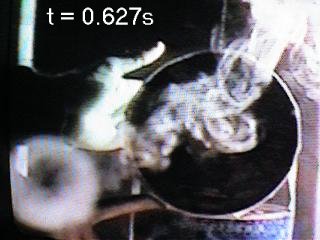 |
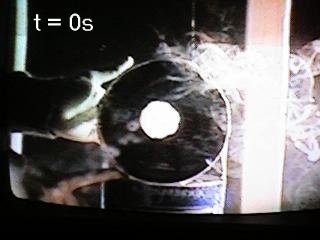
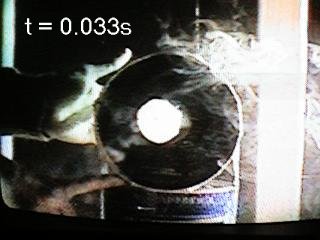
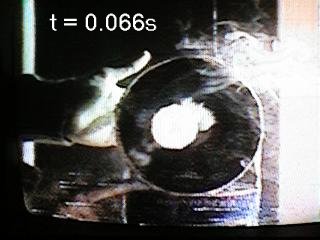
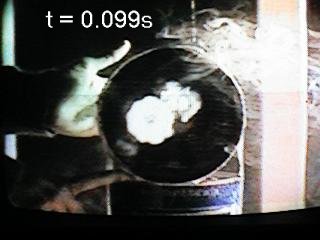
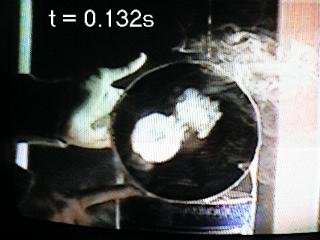
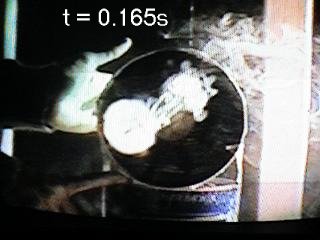
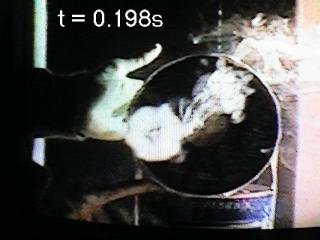
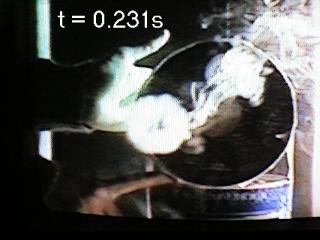
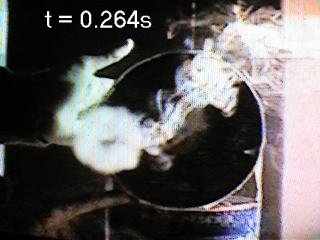
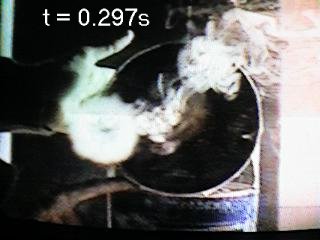
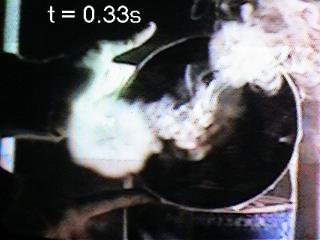
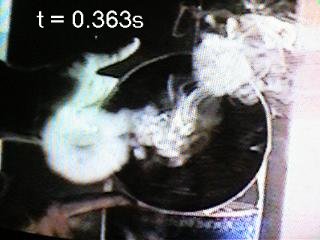
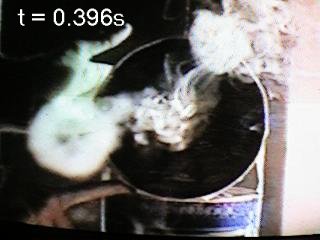
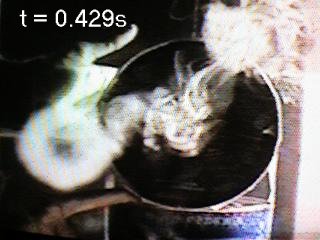
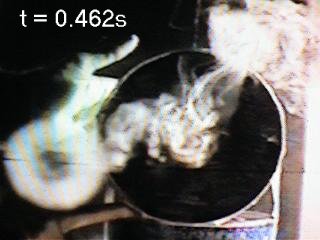
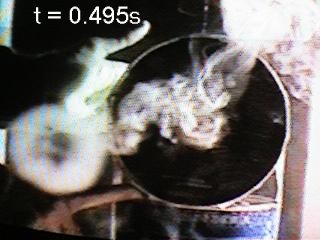
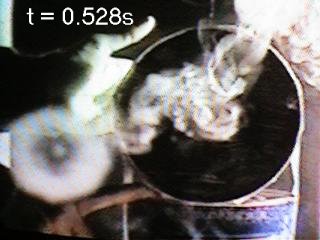
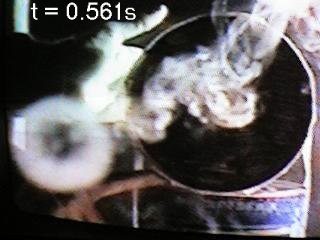
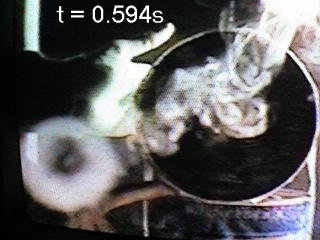
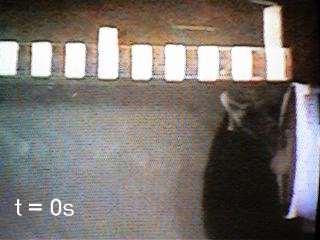
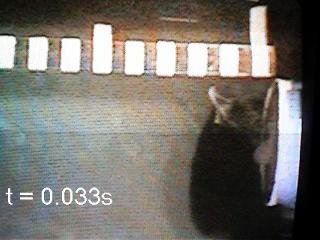
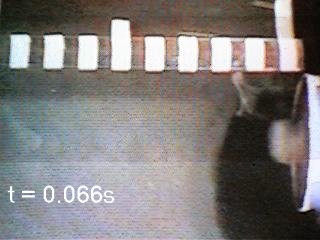
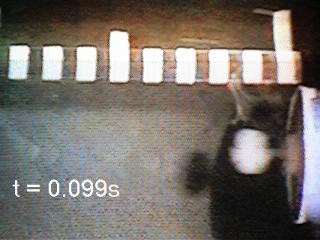
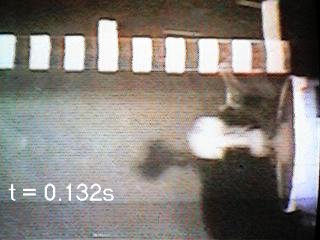
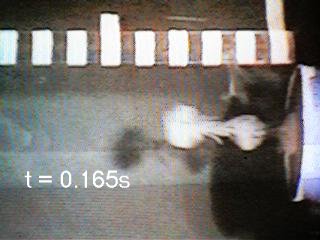
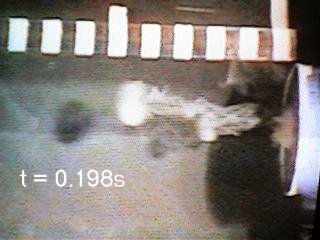
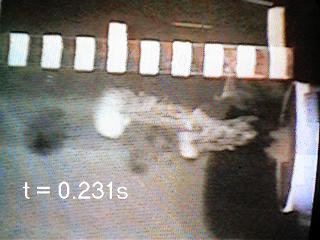
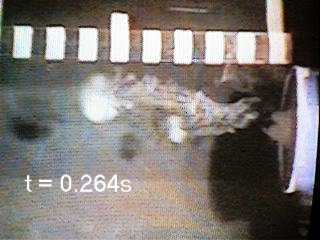
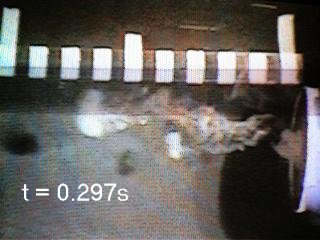
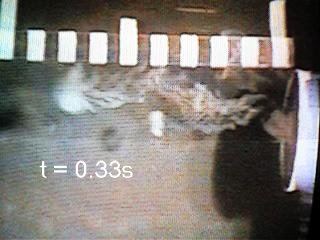
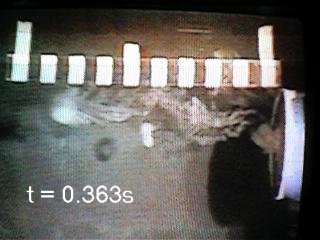
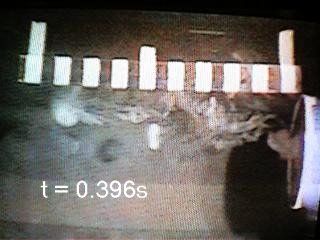
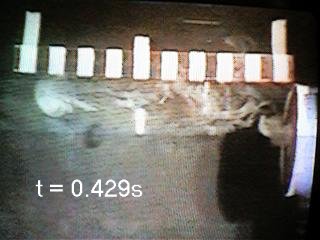
The sequence of images above shows how the diameter of
the smoke rings increase after a time t. Each image represent a 1/30
seconds (0.033 s) increment. Questions arise when we think about
this phenomenon:
To answer these questions, we decide to create an experimental design that proves if a relation exist between the diameter and the displacement of the smoke rings. Using a coffee can with a 5 cm (diameter) hole in one end and a rubber balloon at the other end as a membrane, we start to generate the smoke rings. Using a smoke machine, we fill up the coffee can with smoke. This enabled us to visualize the behavior of the air. As the membrane goes back and forward, it pushes the air and the smoke out of the coffee can (diagram 1).Why is the ring diameter increasing?
What causes the horizontal displacement of the smoke ring?
Is there a relation between the displacement and the increase diameter?
If this relation exist, what is the mathematical model that explains the relationship?

Diagram 1 - Cross-sectional view of the coffee can with
the air coming
out because of the wave force generated by the vibration
of the membrane.
The flow separates at the edge of the opening. The air next to it, changes its direction causing a deviation in the airflow. The air start rotating causing a vortex. (diagram 2).
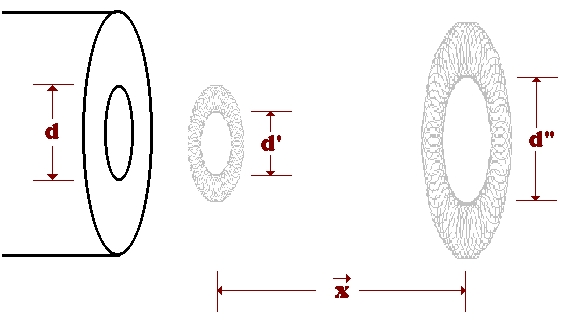
Diagram 2 - Generation of the vortex because of the change
in the airflow direction.
The rotating air starts to move forward and the ring starts to grow up. The air behavior is similar as other smoke rings we created during the experiment. These smoke rings are what we call, vortex rings (diagram 3).
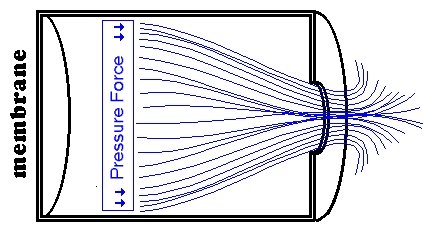
Diagram 3 - As the smoke ring moves
forward (x'), its diameter increased'').
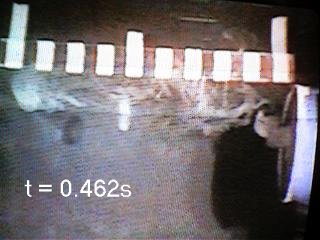
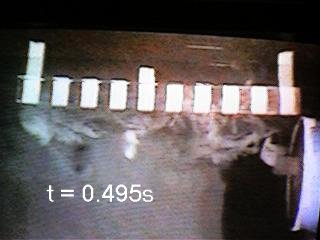
To determine if a relation exists, we use a fixed video
camera. Each image below represents a 1/30 seconds (0.033 s) increment.
Each white line behind and the separation between them represent a 2 cm
intervals. As the images shows, the smoke ring moves forward and
also increases its diameter. We measured the displacement and the diameter
of the smoke ring in each frame. Using the background scale was easy
to determine the displacement. To determine the smoke ring diameter
we have to use the image composition to count the pixels across the ring
and convert that number in centimeters. To obtain the conversion
factor, we counted the pixels in a 6 cm area using the background scale.
After that, we counted the pixels across the smoke ring in each frame and
converted the number of pixels in centimeters using the conversion factor.
 |
 |
 |
 |
 |
 |
 |
 |
 |
 |
 |
 |
 |
 |
 |
 |
Here are two graphs of the data we collected during the experiment.
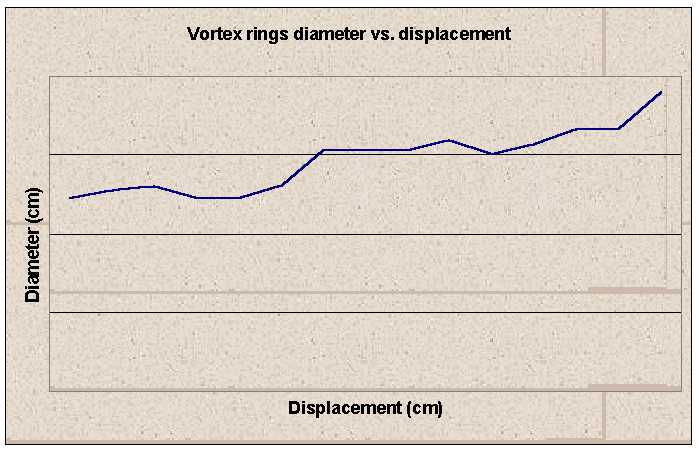
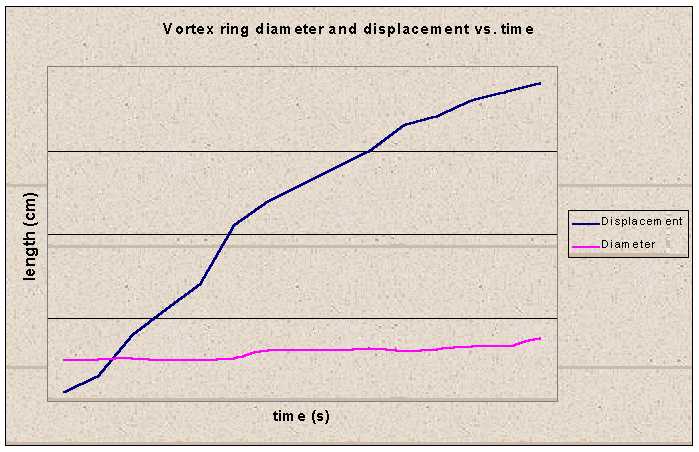
The first graph shows how the diameter and the displacement increase with a time t. The second graph presents how the diameter increases with the displacement. Some variations in the diameter increment shows that other parameters are present in the diameter increment. Parameters such as angular momentum and the drag force, cause the air in which our vortex ring is moving can to be factors that affect the diameter change.
From the graphs we can conclude that the displacement changes have a linear tendency. This means that the velocity (change in position respect a change in time) is almost proportional or constant. If this is true, then the linear acceleration is zero, or the forces acting in the vortex ring are balance.
If the forces are balance (F = 0) then we have no forces causing torque in our vortex ring, so the conservation of angular momentum is present (Pi = Pf ; where P is angular momentum).
Pi = Pf
I wi = I wf
I is an approximation of the inertia of a cross-sectional area of our vortex ring which is a cylinder.
mi ri2 wi = mf rf2 wf
(m is the mass, r is the radius of the cylinder and w is the angular velocity)
From our experiment we observed that as the vortex ring moves forward, it looses some of its mass into the wake. This means one of the following will happen:
1. The radius of the cylinder will increase.
2. The angular velocity will increase.
Whatever happens will affect the rate of change of the
vortex ring core diameter.
| b | |||||
| The
Woodrow Wilson National Fellowship Foundation
CN 5281, Princeton NJ 08543-5281 - Tel:(609)452-7007 - Fax:(609)452-0066 Technical contact: [email protected] |